How much does a business website really cost?
A practical guide to website cost, scope, recurring expenses and what starting prices do and do not include.
- Author
- Víctor Ribera
- Published
- Updated
- Reading time
- 3 min read
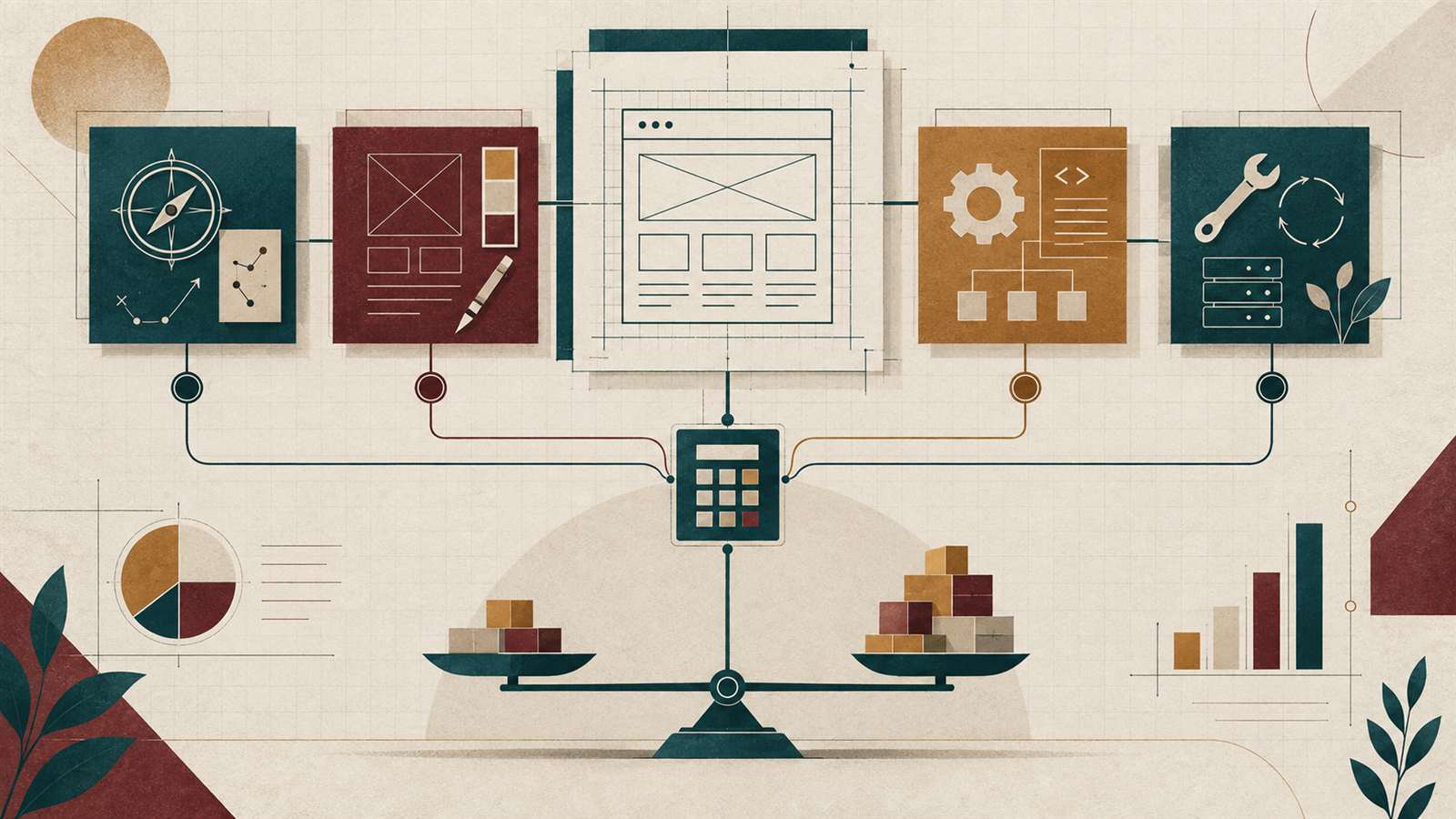
The price of a website is not determined by the number of screens alone. Two five-page websites can require very different levels of strategy, design, content work, integrations and quality assurance.
A useful estimate starts by defining the business decision the website must support and the responsibilities included in the project. That makes proposals comparable and exposes costs that would otherwise appear later.
Start with the job the website must do
A brochure site that confirms credibility has a different scope from a lead-generation site with multiple audiences, service journeys and a CMS. The first question is not “how many pages?” but “what must a visitor understand, trust and do?”
When the commercial objective is clear, it becomes easier to decide which pages, components and integrations are genuinely necessary.
- Primary audience and their main question
- Most important conversion action
- Content that must be created or migrated
- Systems the website must connect to
What drives the cost of a business website?
Most project cost sits in decisions and implementation quality rather than visual polish alone. A custom information architecture, reusable design system and careful responsive behaviour take more work, but reduce inconsistency and future rework.
- Strategy and content structure
- Custom design versus adapted templates
- CMS, forms and third-party integrations
- Accessibility, performance and technical SEO
- Testing, launch support and documentation
What a complete proposal should make explicit
A good proposal describes outputs and boundaries. It should state who writes content, how many review rounds are included, which browsers and devices are tested, and what happens after launch.
Without these details, a lower quote may simply move work back to your team or defer essential tasks.
- Deliverables and acceptance criteria
- Content and image responsibilities
- Migration and redirects
- Analytics, cookie and form setup
- Warranty, maintenance and handover
Plan for recurring website costs
Hosting, domain management, maintenance, licences and content updates are part of the real cost of ownership. Some platforms bundle more operations; others offer more control but require technical care.
The cheapest build can become expensive when every small change needs custom work. Kanso Website Care starts from €49 per month; whether ongoing care makes sense depends on the website, change frequency and level of support required.
Questions to ask before choosing
Use the proposal meeting to test how the supplier thinks. Clear answers usually reveal a clear process.
- What business outcome is this scope designed to support?
- Which important work is explicitly not included?
- How will performance and accessibility be checked?
- Who owns the code, accounts and content?
- How easy is it to extend the site later?
Choose the scope that reduces uncertainty
A website proposal is useful when it lets you understand what will be built, why it matters and what your team must provide. Compare scopes on the same basis, then choose the approach that solves the business problem without unnecessary complexity.