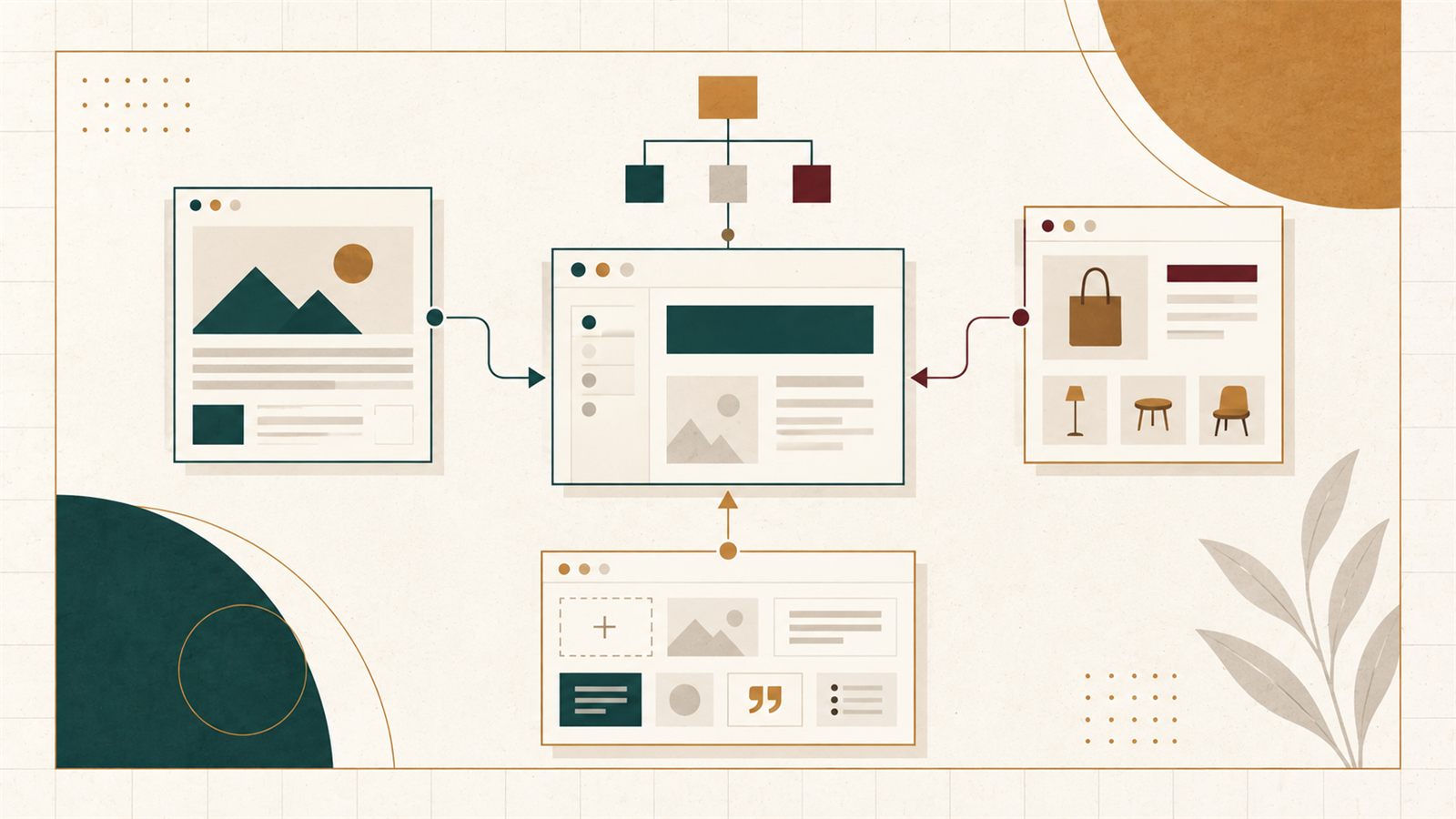
Landing page or full website: which do you need?
Choose the right format by looking at the visitor decision, the number of audiences and the role of search, not by following a trend.
- Author
- Víctor Ribera
- Published
- Reading time
- 3 min read
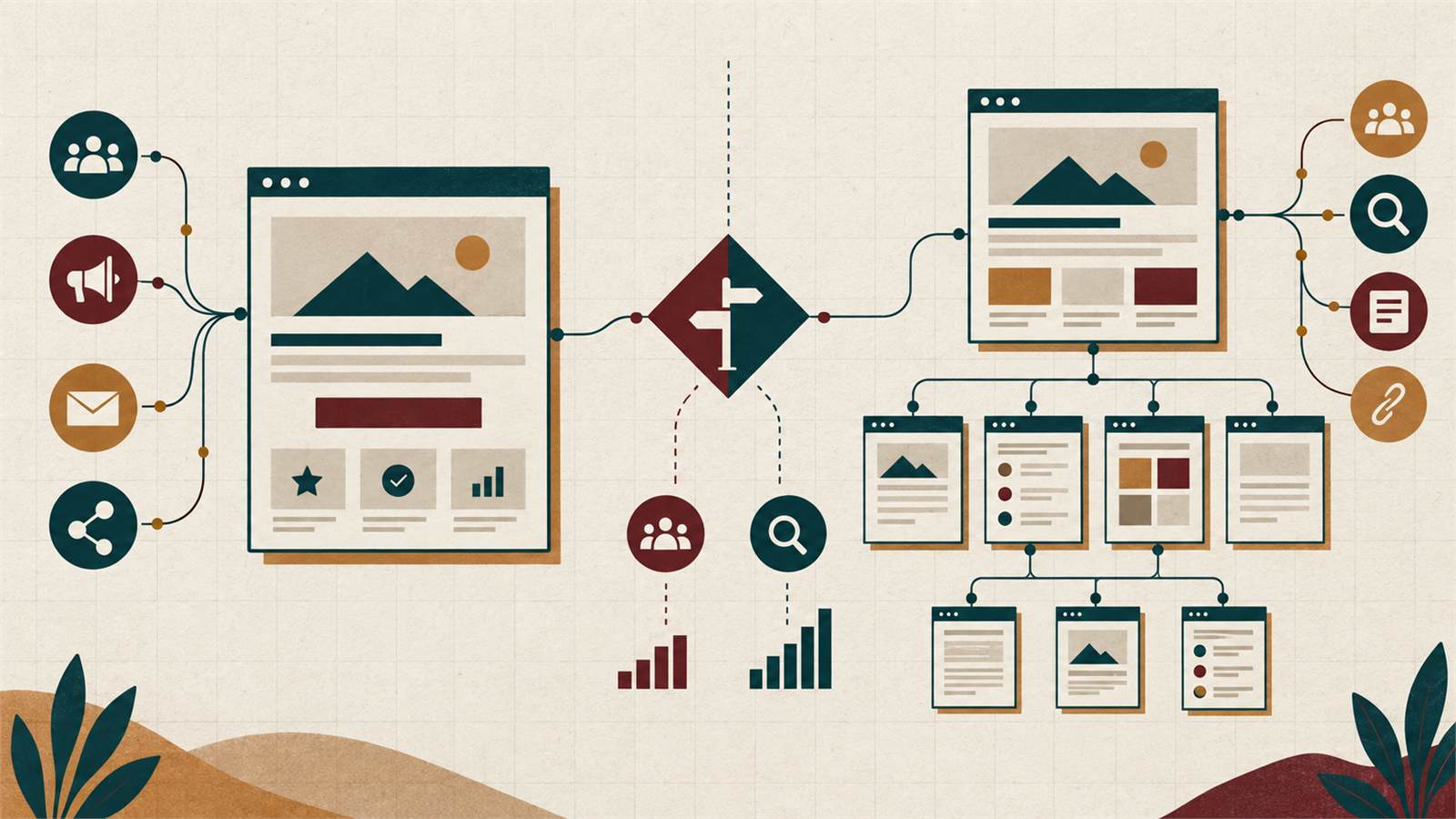
A landing page and a full website are not smaller and larger versions of the same product. They support different decisions.
The best choice depends on how focused the offer is, how much evidence a visitor needs and whether the business must be discoverable for several topics over time.
When a landing page is the stronger choice
A landing page works well when traffic arrives with a known context: a campaign, a single service, an event or a specific product. The page can remove distractions and build one argument toward one action.
- One audience and one primary intent
- A clear offer with limited explanation
- Traffic from advertising, outreach or a QR code
- A measurable conversion goal
When a multipage website is necessary
A full website is more useful when people enter with different questions. Separate pages let the company explain services, proof, approach and industry context without forcing everything into one long sales page.
It also creates a clearer structure for internal linking and search visibility across multiple topics.
- Several services or customer groups
- A considered purchase with trust requirements
- Ongoing content and SEO ambitions
- Recruitment, support or partner information
The hybrid option
Many businesses benefit from a core website plus focused landing pages. The website carries long-term credibility and navigation; campaign pages create a controlled journey for a specific offer.
The important part is avoiding duplicated or contradictory content. Each page should have a clear role and canonical relationship where relevant.
A simple decision framework
Score the project on focus, complexity and longevity. A highly focused temporary campaign points toward a landing page. A broad, evolving business points toward a structured website.
- How many distinct visitor intents exist?
- Will people compare several services?
- Does organic search matter beyond one keyword?
- Will the content need regular expansion?
- Does the visitor need company-level proof?
Do not confuse simplicity with a lack of quality
A one-page site still needs clear messaging, responsive design, accessibility, performance and analytics. Fewer pages reduce content volume, but they do not remove the need for good decisions.
Choose the smallest structure that remains honest
Do not build ten pages when one focused page is enough. Do not compress a complex business into one page merely to reduce the initial budget. Choose the smallest structure that gives visitors the information and confidence they need.