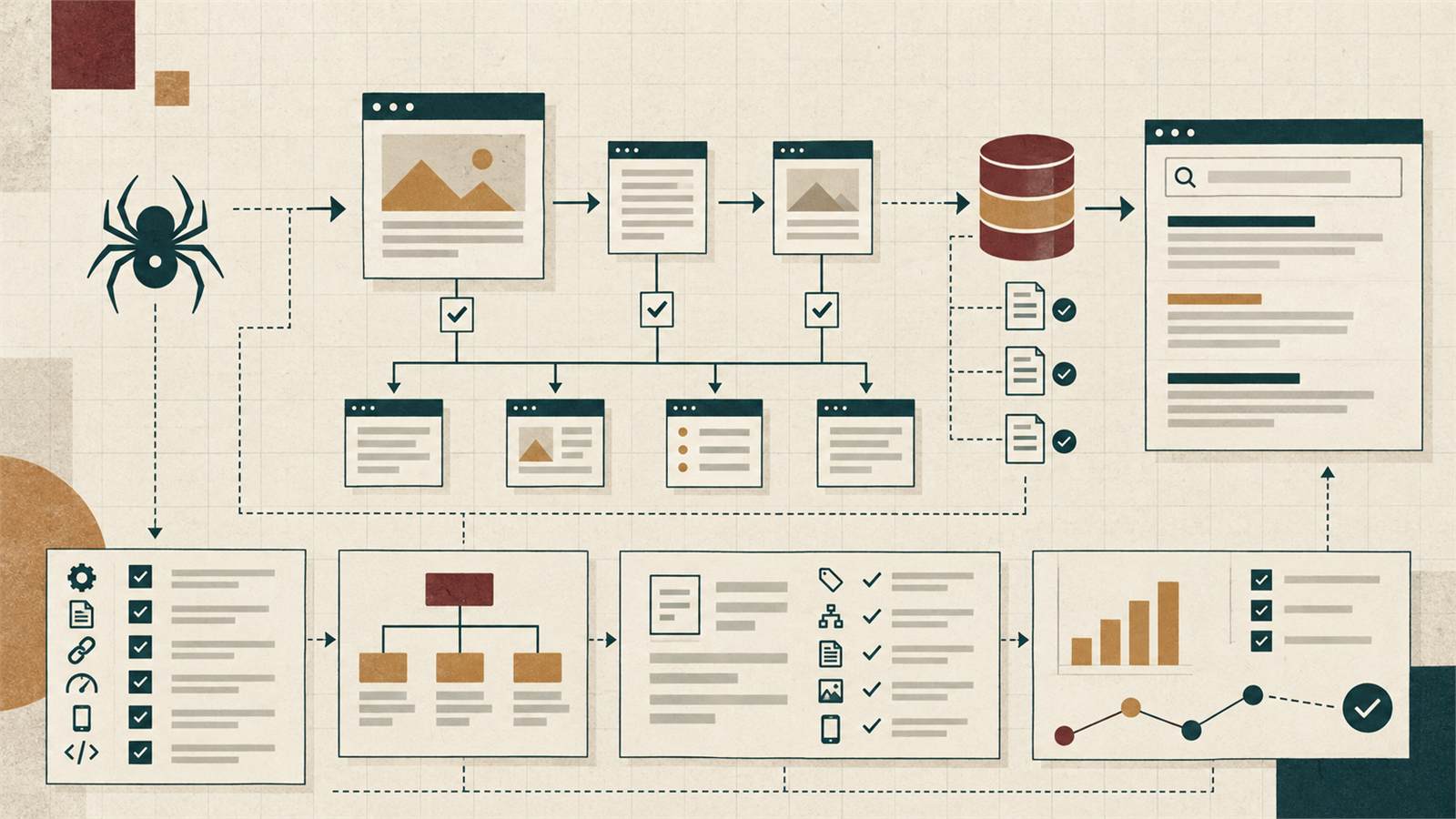
SEO content architecture for service businesses: from scattered pages to a clear system
Organise services, expertise and supporting content so people and search engines can understand how the business fits together.
- Author
- Víctor Ribera
- Published
- Reading time
- 8 min read
Service businesses often publish content in the order ideas appear. A new service gets a page, a campaign gets a landing page and occasional articles accumulate in a blog. After a few years, useful information exists, but the relationships between it are unclear.
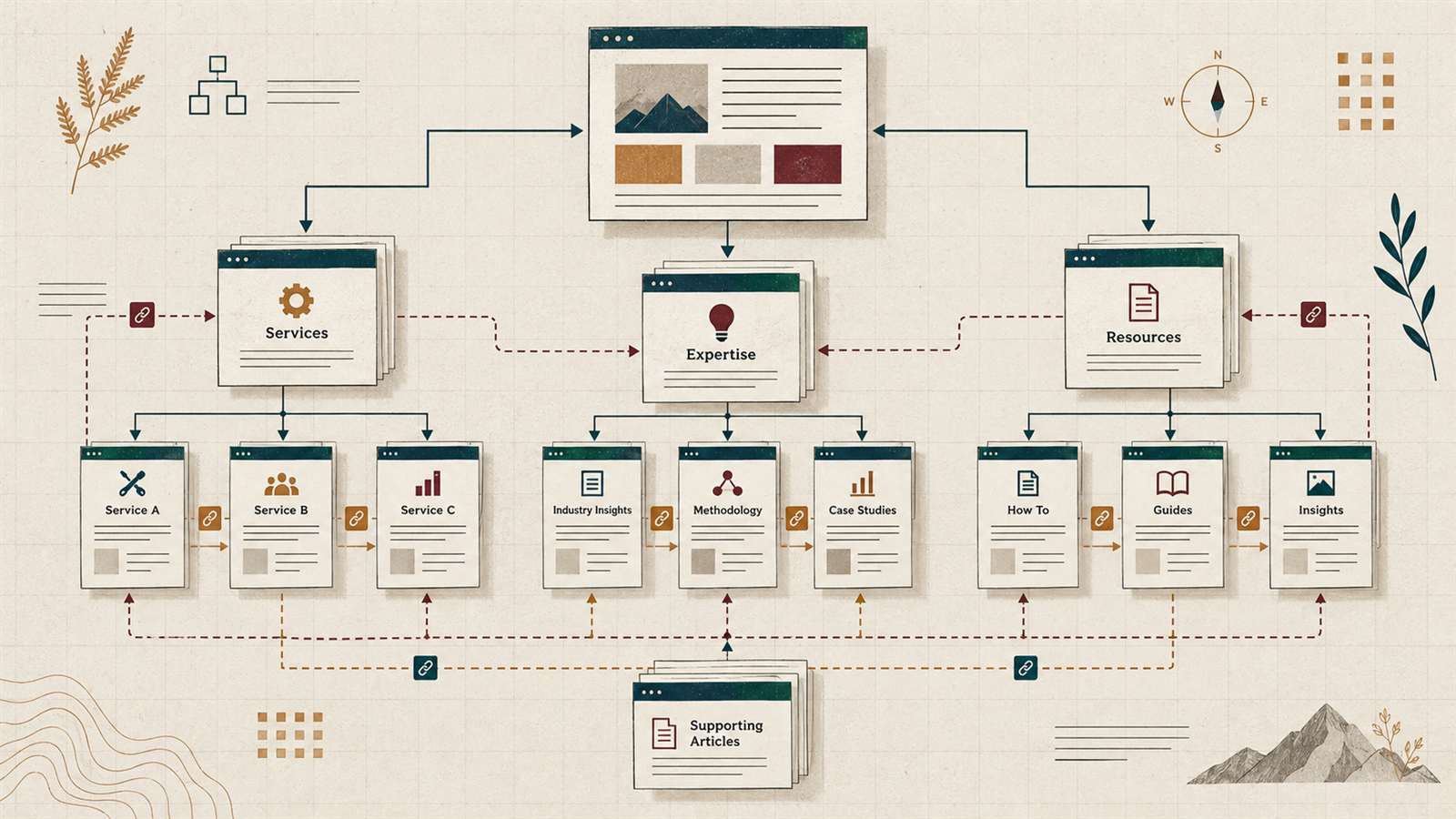
Content architecture turns that collection into a system. It defines which pages own important topics, how supporting content connects to commercial journeys and how the structure can grow without creating duplicate or orphaned pages.
Start with the business model and the customer language
List the services the business wants to sell, but also list the problems customers describe before they know the service name. Internal terminology may not match search behaviour or the categories visitors expect.
Interview sales and support teams, review enquiries and inspect search data. Group language by intent: learning about a problem, comparing approaches, evaluating a provider and taking action.
- Commercial services and priority markets
- Customer problems and trigger events
- Common comparison questions
- Proof required before contact
Assign one clear purpose to each important page
Every indexable page should have a distinct reason to exist. A primary service page explains the offer and supports conversion. A specialist page may address a specific audience or use case. An article answers a narrower question and guides the reader toward the next relevant resource.
When two pages compete for the same purpose, combine them or define a meaningful distinction. Rewriting titles while leaving overlapping content rarely solves cannibalisation or user confusion.
- Target audience and stage of awareness
- Primary question answered
- Desired next action
- Unique evidence or expertise
- Owner responsible for keeping it current
Build service hubs before publishing large topic clusters
A hub is not simply a page with many links. It is a coherent route through a service area. The main service page establishes the proposition, while case studies, process pages, FAQs and articles resolve specific concerns.
Begin with the content closest to revenue and customer understanding. Publishing dozens of informational articles before the service pages are credible can create traffic that has nowhere useful to go.
- Strong core service page
- Supporting proof and case studies
- Decision guides and common questions
- Clear contact or assessment path
Use navigation for orientation and internal links for context
Primary navigation should expose the main shape of the business without listing every page. Contextual links then connect related ideas inside the content. A sentence explaining why the next page is relevant is more useful than a generic “learn more”.
Breadcrumbs help people and search engines understand hierarchy, especially in deeper resource sections. Footer links can support discovery, but they should not be the only path to an important page.
- Descriptive anchor text
- Links from authoritative pages to strategic destinations
- No important orphan pages
- Breadcrumbs that reflect the actual hierarchy
Separate categories from tags and filters
Categories should represent a small, stable way of browsing the content. Tags are useful only when they create a meaningful collection. Automatically generating indexable pages for every label, author, date and filter can create thin archives and duplicate routes.
Decide which archive pages deserve search visibility. Add unique context where an archive is useful and keep purely functional filters out of the index when they do not provide a standalone result.
- Limited category set with clear definitions
- Consistent assignment rules
- Canonical handling for filters and parameters
- Indexation decisions documented for templates
Design for local and multilingual growth
Location pages and language versions should not be generated by replacing a city or translating words mechanically. Each version needs a real audience, accurate service availability and enough local relevance to justify the page.
Keep relationships between languages explicit. Use locale-specific URLs, canonical URLs within the same language and hreflang between equivalent pages. Local teams may need freedom to adapt examples and calls to action while preserving the shared structure.
- One URL per language and purpose
- Equivalent pages connected across locales
- No fallback content exposed in the wrong language
- Local proof and contact details where relevant
Plan the content model and URL structure together
URLs should be readable, stable and aligned with the content hierarchy, but they do not need to include every category. Avoid changing established URLs solely to make them shorter. The migration risk may outweigh the small benefit.
Model reusable data such as authors, services, locations and related articles separately from page layout. This makes it easier to update information consistently and generate structured metadata without duplicating content.
- Stable locale and section patterns
- Redirect plan for retired URLs
- Reusable entities and relationships
- Editable metadata and social images
Create an editorial decision framework
Before approving a new page, ask whether an existing page should be improved instead. Define the intended audience, search intent, unique contribution and internal links before writing. This prevents the blog from becoming a storage area for disconnected ideas.
Quality control should include factual review, accessibility, metadata, link checks and a review date. Content that no longer represents the service should be updated, merged or retired with an appropriate redirect.
- Brief before production
- Named subject owner
- Publication and review dates
- Update, merge and retirement rules
Measure journeys, not page views alone
Traffic can reveal demand, but architecture should be evaluated through movement and outcomes. Review whether informational pages lead to relevant services, whether visitors return to search repeatedly and where they leave a decision journey.
Combine analytics with Search Console, enquiry quality and qualitative feedback. A page with modest traffic can be valuable if it answers a high-intent question and supports better conversations.
- Entrances by intent
- Internal link usage
- Progression to commercial pages
- Qualified enquiries assisted by content
- Search queries that reveal missing or mismatched pages
Audit existing content before drawing the new tree
Export the current URL inventory and combine it with traffic, backlinks, rankings, conversions and content ownership. The goal is not to preserve every page, but to understand what value and history already exist. Similar pages can then be compared instead of reviewed in isolation.
Classify each URL as keep, improve, merge, redirect or remove. Record the destination and reason. This creates a migration map and prevents useful content or external equity from disappearing during a redesign.
- URL, title and status
- Organic entrances and assisted conversions
- Backlinks and internal links
- Content owner and last meaningful update
- Recommended action and redirect destination
Use briefs that define the page within the system
A content brief should describe more than keywords. It should state the page purpose, audience, decision stage, unique angle, required evidence, related pages and intended next action. Writers can then create a useful part of the journey rather than an isolated article.
Include boundaries. Name topics that belong on another page and links that must be added in both directions. This reduces overlap and makes internal linking part of production instead of a cleanup task.
- Purpose and primary intent
- Questions and objections to resolve
- Evidence, examples and subject experts
- Required incoming and outgoing links
- Update owner and review date
Maintain the architecture through regular portfolio reviews
Content systems drift because publishing is visible while consolidation is not. Schedule reviews by service area. Compare performance, freshness and overlap, then choose a small set of updates, merges and retirements.
The review should include commercial teams. A page may attract traffic but create the wrong expectation, while a low-traffic guide may be central to qualified sales conversations. Architecture stays useful when search data and business knowledge are considered together.
- Quarterly review of priority hubs
- Annual inventory of all indexable URLs
- Merge duplicates before commissioning new pages
- Track changes to navigation and internal links
Create a structure that can explain and grow
A strong content architecture gives every important topic an owner and every useful page a place in the journey. It reduces duplication, improves discovery and makes future publishing decisions easier.
Start with services and customer questions, build clear hubs, link contextually and maintain the system with explicit editorial rules. SEO benefits follow from a website that is easier to understand and navigate.