A technical SEO checklist for small business websites
A prioritised checklist for making important pages crawlable, indexable, understandable and maintainable.
- Author
- Víctor Ribera
- Published
- Updated
- Reading time
- 3 min read
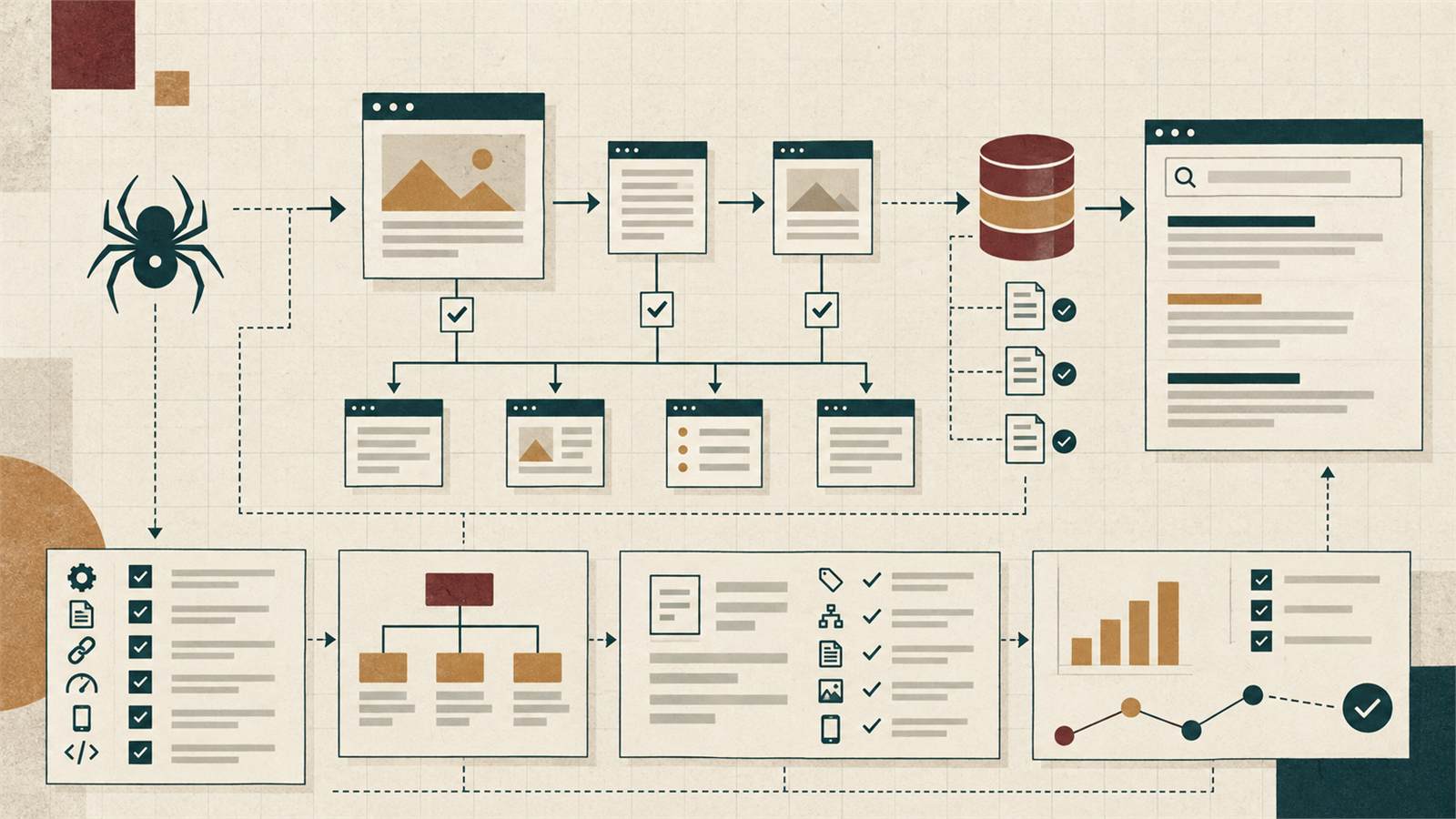
Technical SEO is the part of search visibility that makes content accessible and understandable to search engines. It cannot replace useful content, but technical mistakes can prevent strong content from being discovered or consolidated correctly.
The checklist below starts with issues that can block visibility and moves toward improvements that make a healthy site easier to maintain.
1. Confirm that important pages can be crawled and indexed
Start with the pages that should generate business value. Check whether they return a successful status, are not unintentionally blocked and do not carry a noindex directive.
A URL appearing in a sitemap does not override a blocked or non-indexable page. Verify the actual rendered page and HTTP response.
- HTTPS loads without redirect loops
- Robots rules do not block required resources or pages
- No accidental noindex on production
- Important content is present in the rendered HTML
2. Make canonical and duplicate signals consistent
Duplicate URLs are common when filters, tracking parameters or several domain variants expose the same content. Choose the preferred URL and make internal links, canonicals, redirects and sitemaps agree.
Conflicting signals force search engines to decide which URL represents the content and can waste crawl attention.
- One preferred protocol and hostname
- Self-referencing canonicals on indexable pages
- Redirect retired duplicates when appropriate
- Avoid linking internally to non-canonical variants
3. Keep the sitemap and internal links useful
A sitemap should contain canonical URLs that you genuinely want indexed. It helps discovery, but it is not a replacement for crawlable navigation.
Important pages should be reachable through contextual internal links, not only through a search form or JavaScript interaction.
- Remove redirects, errors and noindex URLs from the sitemap
- Update last-modified dates only when content changes materially
- Use descriptive anchor text
- Check for orphaned commercial pages
4. Review page meaning and search appearance
Each page needs a clear purpose, a descriptive title and a heading structure that supports reading. Meta descriptions do not guarantee a specific snippet, but they help define the page proposition.
Structured data can clarify eligible content types, but it must match visible content and follow the relevant guidelines.
- Unique, useful title per page
- One logical main heading and descriptive subheadings
- Accurate language and hreflang signals
- Valid structured data where it genuinely applies
5. Prioritise by impact and evidence
Do not treat every audit warning as equally important. Fix blockers, widespread template problems and issues on valuable pages first.
After implementation, verify with server logs, Search Console, URL inspection and real traffic rather than assuming a green audit score equals business impact.
- Indexing blockers
- Sitewide canonical or metadata defects
- Broken internal links and redirects
- Performance problems affecting key templates
- Enhancements with a clear user or search benefit
Technical SEO should create a stable foundation
The goal is not a perfect audit score. It is a site where valuable pages can be discovered, understood, consolidated and improved without recurring technical friction.