Web accessibility as a measure of business quality
Accessible design improves robustness, clarity and task completion for more people. It is a product-quality practice, not a final compliance layer.
- Author
- Víctor Ribera
- Published
- Updated
- Reading time
- 3 min read
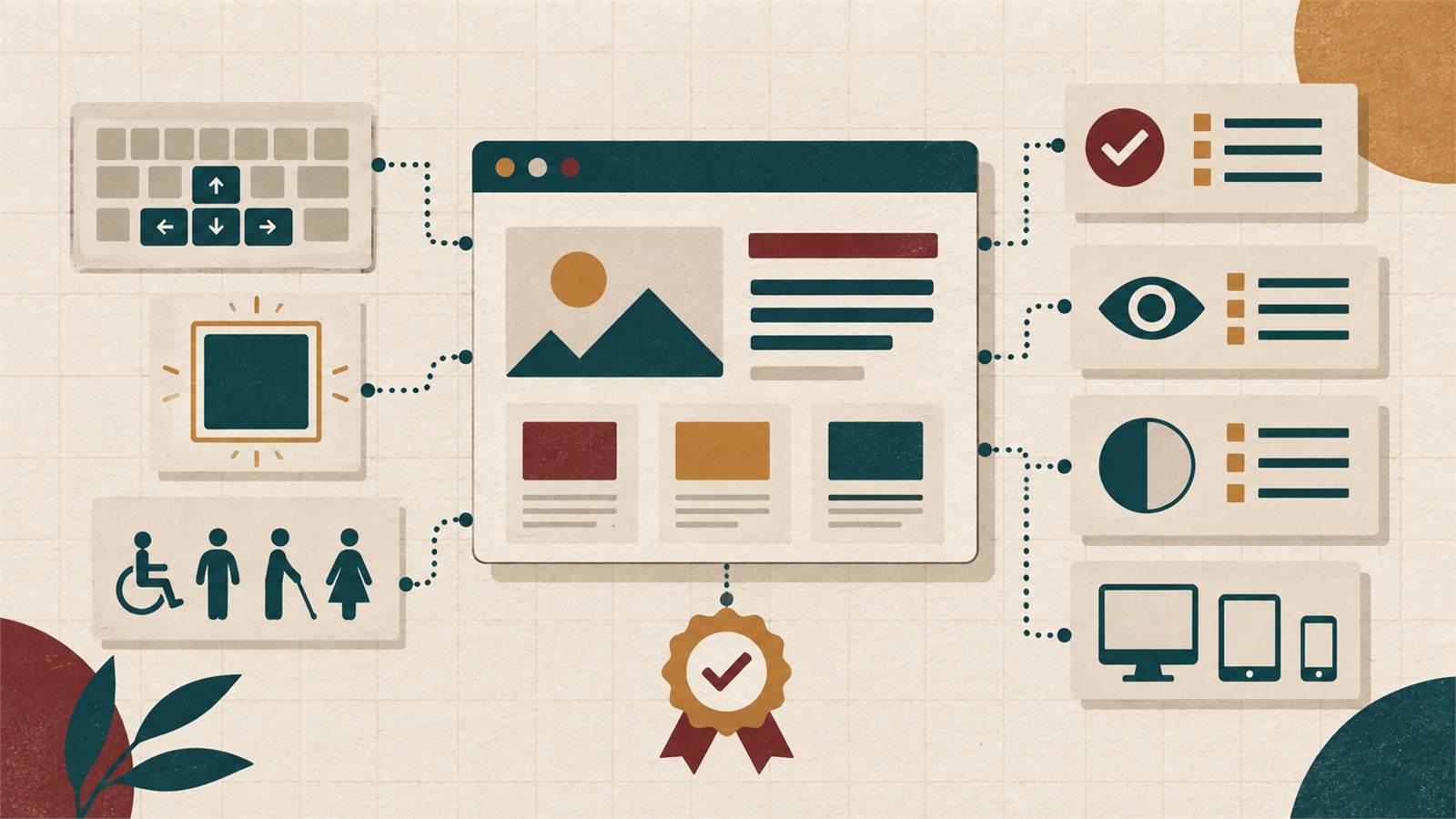
Web accessibility means designing and building websites so people with disabilities can perceive, understand, navigate and interact with them. The same practices often help people using mobile devices, temporary injuries, noisy environments or slow connections.
Accessibility is strongest when it is part of content, design and engineering decisions from the start. Retrofitting at the end is slower and usually misses structural problems.
Accessibility reveals product quality
A page that works with a keyboard, retains visible focus and exposes meaningful labels is usually better structured. Clear headings, error messages and link text improve understanding for many users.
This is why accessibility should be reviewed as an experience and maintainability concern, not only as a legal checklist.
Start with the core user journeys
Prioritise tasks that matter: finding a service, completing a form, buying a product, reading essential information and contacting support.
Test those tasks with keyboard navigation, zoom, screen-reader semantics and reduced motion settings. Automated tools find useful issues but cannot judge whether the journey makes sense.
Build accessible patterns into components
Reusable components should encode labels, focus behaviour, states and error relationships. That prevents the same defect from being repeated across pages.
Content editors also need rules for headings, alternative text, link wording, tables and media. Accessibility is shared ownership.
- Semantic HTML before custom roles
- Visible focus and logical tab order
- Labels and instructions that remain present
- Sufficient target sizes and reflow
- Motion that can be reduced
Treat conformance as evidence, not the whole outcome
WCAG provides testable criteria and a shared language. A conformance review is valuable, but a technically conforming flow can still be confusing.
Combine standards checks with user-centred testing, clear content and support for assistive technology. Record known limitations and ownership for fixing them.
Regulation increases the need for preparation
Accessibility requirements vary by organisation, service and market. In the European Union, the European Accessibility Act expands requirements for certain products and services, including parts of e-commerce.
Legal assessment belongs with qualified counsel. From a product perspective, building accessible foundations early is safer and more efficient than waiting for a deadline.
Accessibility belongs in the definition of done
A high-quality website should not require a separate rescue project for basic access. Make accessibility part of components, content workflow, QA and ongoing maintenance.