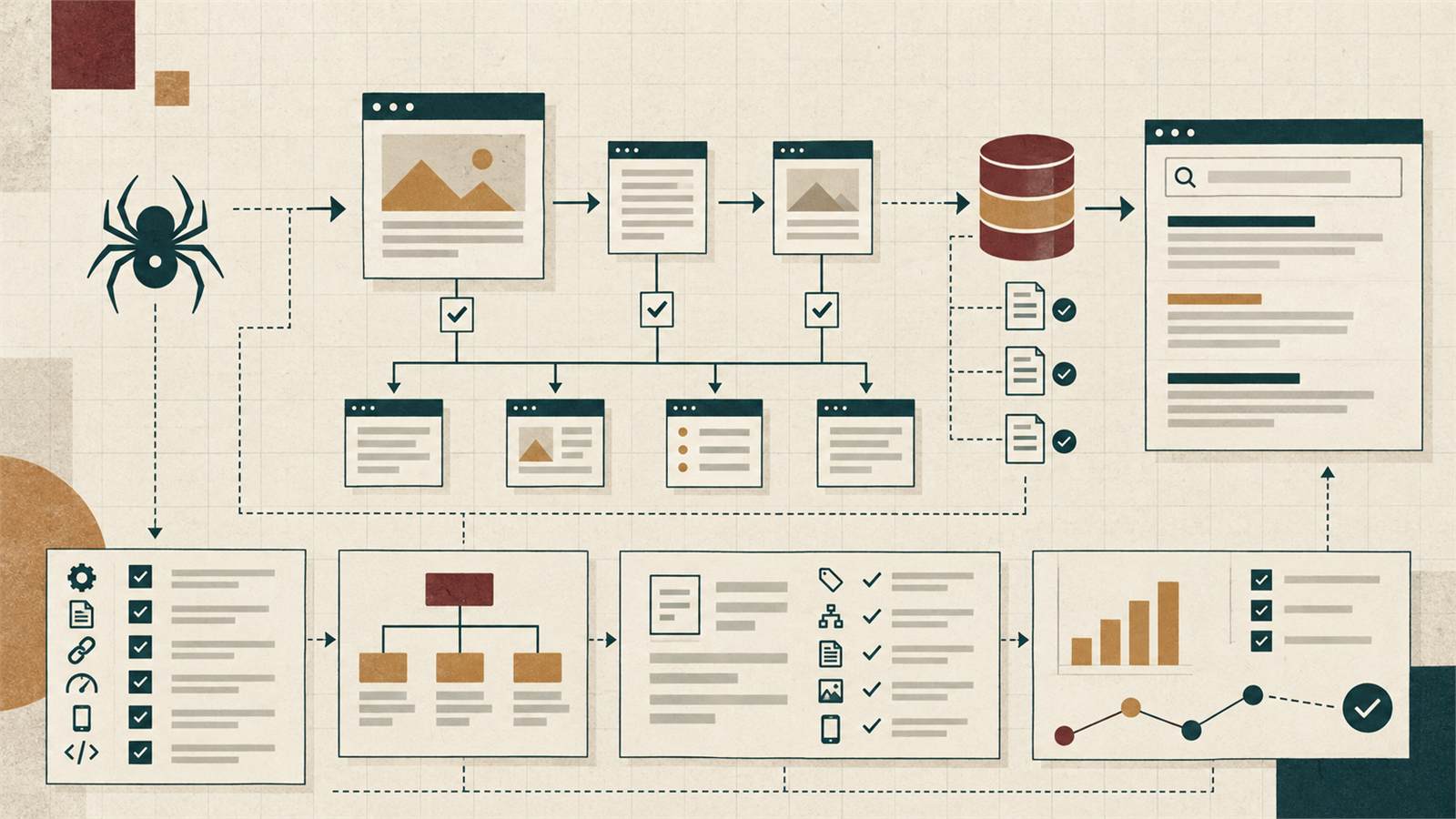
SEO checklist for a website migration
Protect valuable URLs and search signals with an inventory, redirect map, controlled launch and post-launch monitoring.
- Author
- Víctor Ribera
- Published
- Reading time
- 2 min read

A redesign, domain move or platform change can improve a website while temporarily disrupting how search engines understand it. The risk is highest when URLs, content and internal links all change at once without a complete map.
Migration SEO is mostly disciplined inventory, testing and monitoring. It cannot guarantee unchanged rankings, but it can prevent avoidable loss of signals and user journeys.
Create an inventory before changing anything
Crawl the current website and combine it with analytics, Search Console, backlink and business data. A page with little traffic may still support a critical campaign or external link.
Record status, canonical, title, indexability, traffic role and intended destination for every URL that matters.
Map old URLs to the closest equivalent
Redirect each valuable old URL to the most relevant new page, not automatically to the homepage. When no equivalent exists, decide whether to preserve, consolidate or retire the content.
The map becomes the shared contract for development, content, QA and launch.
- One-to-one mappings where possible
- Avoid redirect chains
- Preserve query handling where necessary
- Document intentionally removed URLs
Prepare the new site without exposing it incorrectly
Use authentication or controlled access for staging rather than relying only on robots.txt. If noindex is used during development, maintain an explicit launch checklist to remove it.
Test canonical tags, hreflang, internal links, structured data, forms and analytics before changing DNS or redirects.
Launch redirects and signals together
At launch, enable permanent redirects, update internal links, publish the new sitemap and verify the preferred domain and protocol.
Keep the old domain and redirect infrastructure active long enough for users and crawlers to reach the new locations. Avoid stacking a migration with unrelated infrastructure changes when possible.
Monitor patterns, not isolated fluctuations
Check server errors, redirect failures, indexed pages, sitemap processing and key landing pages. Compare page groups rather than reacting to a single daily position.
Inspect important URLs and fix systemic issues quickly. Continue monitoring until crawling, indexing and traffic patterns stabilise.
A migration is a controlled transfer of meaning
The goal is not simply to send every old URL somewhere. It is to preserve the relationship between user intent, content and destination while the technical system changes.